Honda Mower Surging? I Fixed Mine in 15 Minutes
My fix: a used mower, a surging engine, and a 15-minute decision
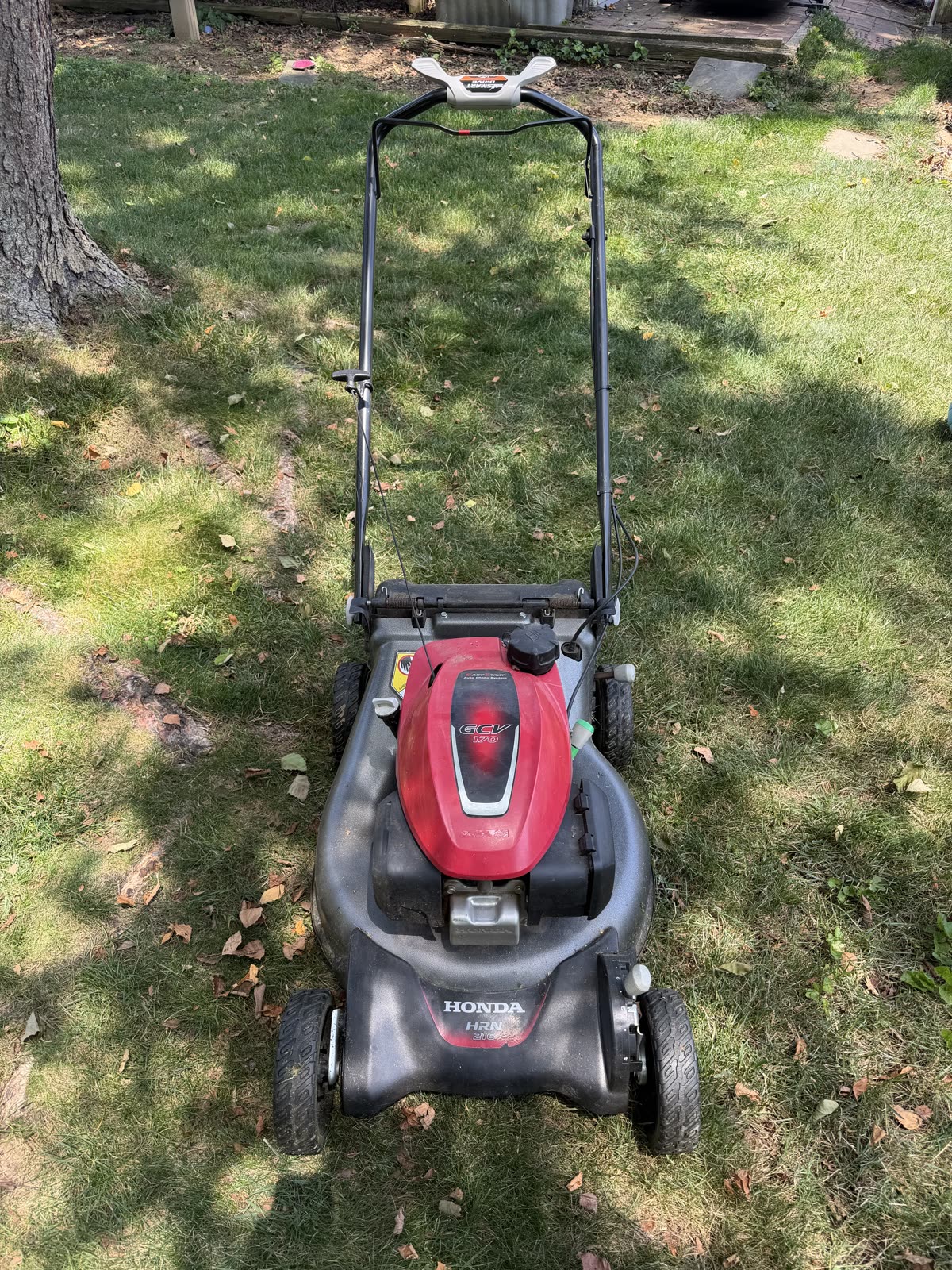
I bought a used Honda HRN216 mower, the one with the GCV170 engine, from a guy who lives an hour away. At his place it started right up and ran great, so I paid him and loaded it up.
Back home, it started fine again. Then, after a few minutes of running, the engine began surging: revving up, dropping down, revving up, over and over. The classic Honda “hunting” sound.
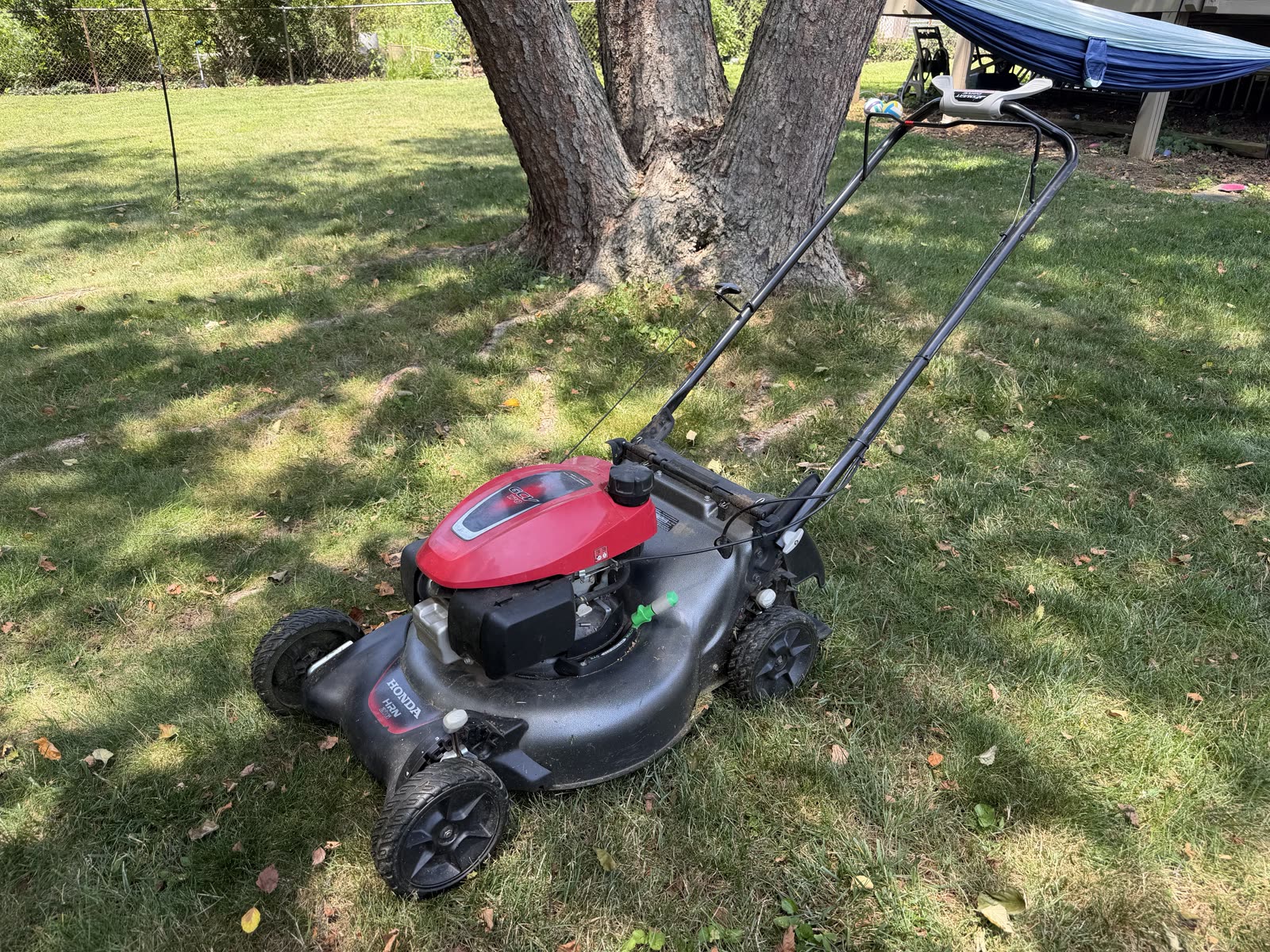
I did the math. Driving back meant at least two hours round trip, plus however long it took him to look at it, assuming he’d even take it back. Instead, I ordered this replacement GCV170 carburetor for about $25 and swapped it in about 15 minutes with basic hand tools. It started on the first pull and has run perfectly ever since.
Why didn’t I clean the original carb first? I didn’t even try. I’ve cleaned carbs before, and it has always taken me longer than 15 minutes, and a cleaning isn’t guaranteed to work the first time. For $25, the swap was the faster, surer bet. And it’s not either/or: I kept the old carb, so I can clean it on a rainy day and have a known-good spare on the shelf.
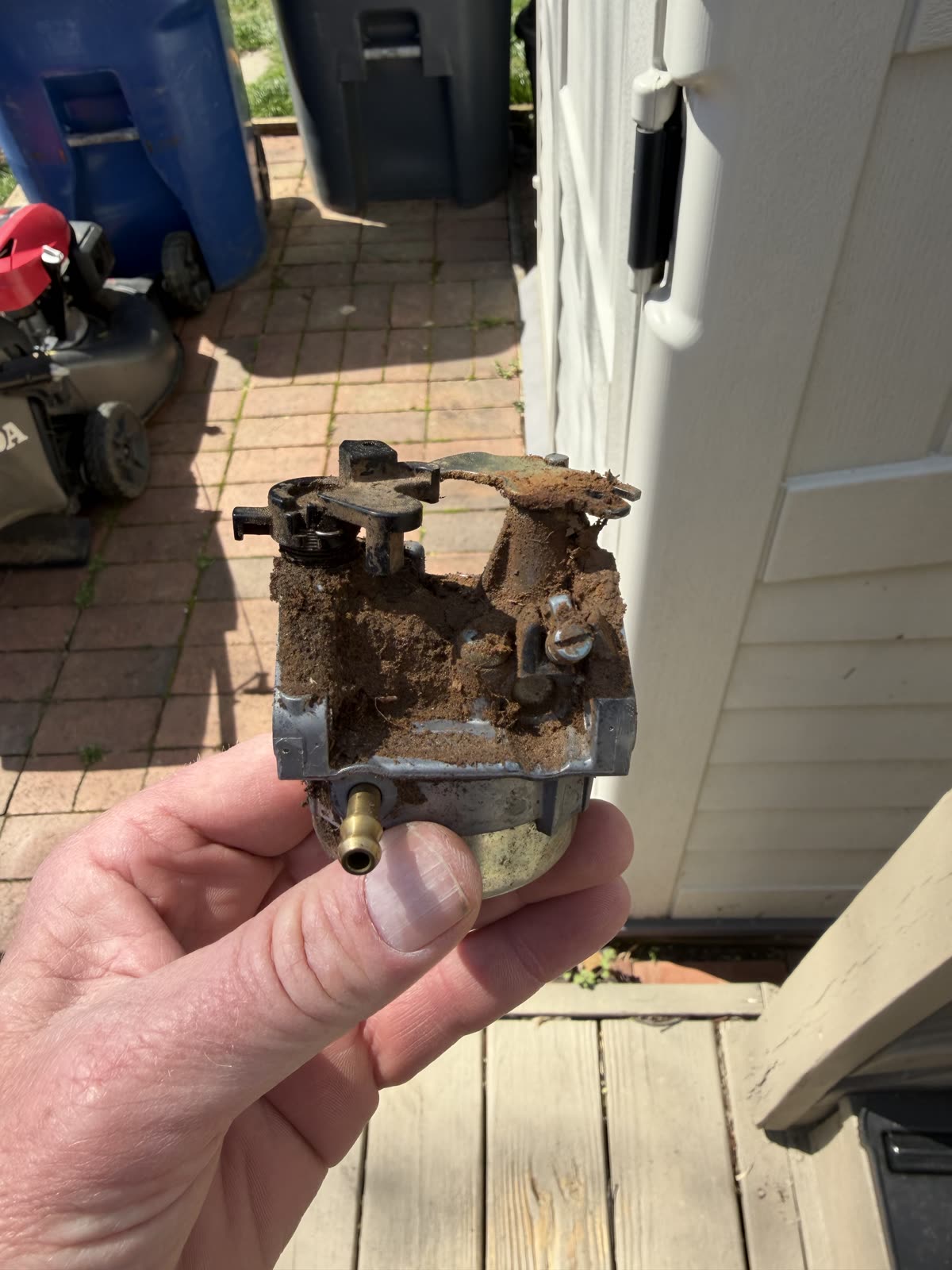
That’s the short version. But while researching the fix, I went deep into what Honda owners across Lawn Mower Forum, LawnSite, MyLawnMowerForum, BobIsTheOilGuy, and DoItYourself report about surging GCV and GX engines, and the pattern is remarkably consistent. My quick carb swap worked, but it doesn’t work for everyone, and the reasons why are worth knowing before you spend money. Here’s the full picture.
The 60-second diagnosis: surging almost always means “lean”
Across hundreds of owner threads, the dominant pattern is the same: surging is usually a lean condition. The engine isn’t getting enough fuel, or it’s getting too much unmetered air. It’s almost never a mysterious Honda engine failure.
The fastest diagnostic test costs nothing: slowly apply partial choke while the engine surges. If the engine smooths out on partial choke, it’s telling you it wants a richer mixture. That points to:
- A clogged pilot/idle jet or main jet (the #1 culprit, usually from stale gas varnish)
- A fuel restriction (tank debris, line, cap vent)
- An air leak at a carb or intake gasket
Don’t run on choke as a permanent “fix”: it fouls the plug and masks the real problem. But as a diagnostic, it’s the best free tool you have.
Other tells from the symptom pattern owners report:
| Symptom | Most likely cause |
|---|---|
| Surges at idle, smooths out under blade load | Clogged pilot/idle jet |
| Only runs with choke partly or fully on | Lean: clogged jets or gasket air leak |
| Starts on starter fluid, then dies | Fuel delivery failure or major air leak |
| Gas leaking into the air filter | Float needle/seat not sealing |
| Runs fine cold, surges after ~10 minutes hot | Cap vent, cooling fins, valve lash, or coil |
| Mine: ran great, surged after a few minutes | Lean condition showing up as the engine warmed |
Five free checks before you spend a dime
Owners (and Honda’s own carburetor troubleshooting sheet) point to these first. Five minutes, no parts:
- Fresh gas from a clean can. Stale fuel varnish is the root cause behind most clogged jets. If the gas is more than a couple months old, drain it.
- Air filter. Honda’s manuals stress this: dirt pulled past a bad filter blocks the carb’s tiny passages. If it’s dirty or fuel-soaked, replace it (OEM Honda 17211-ZL8-023).
- Spark plug. Pull it and look. Black, wet, or crusty? Replace with the correct NGK plug (Honda OEM BPR6ES, 98079-56846).
- Fuel cap vent. Loosen the cap while the engine runs. If the surging changes, the cap vent is blocked.
- Drain the carb bowl. Most Honda carbs have a bowl drain screw. Crack it open and look for water or debris in what comes out.
Fix path 1: clean the carburetor Owner-reported
If the quick checks don’t solve it, the highest-yield fix in every forum I read is cleaning the pilot/idle jet, a jet so small that most people miss it entirely, with a hole roughly the diameter of a hair. Owners describe cleaning the bowl and main jet, reassembling, and still surging, because the pilot jet was the problem all along.
The community-consensus sequence for GCV/GX/EU carbs:
- Shut off fuel (or clamp the line), let the engine cool, and work outdoors. Carb cleaner and gas are seriously flammable.
- Photograph everything before disassembly, especially the linkage and springs. This matters more than you think (see the gasket-and-spring traps below).
- Clean the pilot/idle jet. Remove the idle screw or pilot jet access screw, counting the turns so you can return it to the same setting. Carefully extract the pilot jet and clear the microscopic hole with a fine wire from a jet cleaning tool kit, then carb cleaner and compressed air. Honda specifically cautions against thick needles or force: you can enlarge or damage the jet.
- Clean the main jet and emulsion tube. Drop the bowl, back out the main jet with a small flat screwdriver, and push out the emulsion tube above it. Check every tiny side hole. Owners report “half the holes plugged” causing surging until all were cleared.
- Check the float and needle while the bowl is off. If gas has been leaking into your air filter, this is your culprit; Honda’s check sheet points to a worn or dirty float valve/seat.
- Reassemble with new gaskets (GCV160/GCV190 gasket set). Reusing a torn gasket creates exactly the air leak you’re trying to eliminate.
If cleaning doesn’t fix it, an ultrasonic cleaner can rescue a stubborn carb. Or you move to path 2.
Fix path 2: replace the carburetor (what I did, and the math) I did this
Purists will tell you to always clean first, and they’re not wrong: cleaning is cheaper and teaches you the carb. But here’s the math from my own fix. The replacement carb cost me about $25, roughly what a can of carb cleaner plus a jet kit runs, and the swap took 15 minutes, less time than any carb cleaning I’ve ever done. Replacing also doesn’t mean throwing the old carb away: keep it, clean it when you have time, and you’ve got a spare. For a GCV-series engine like mine, replacement is often the rational choice, if you avoid the traps below.
The swap itself (10 mm wrench, screwdriver, 15 minutes):
- Shut off fuel, pull the air cleaner cover and housing.
- Photograph the linkage, springs, and gasket stack. Seriously, photograph it.
- Unbolt the carb, transfer the linkage and springs to the new carb exactly as they were.
- Install with new gaskets in the same order and orientation you photographed.
- Reconnect the fuel line, reassemble, and start it.
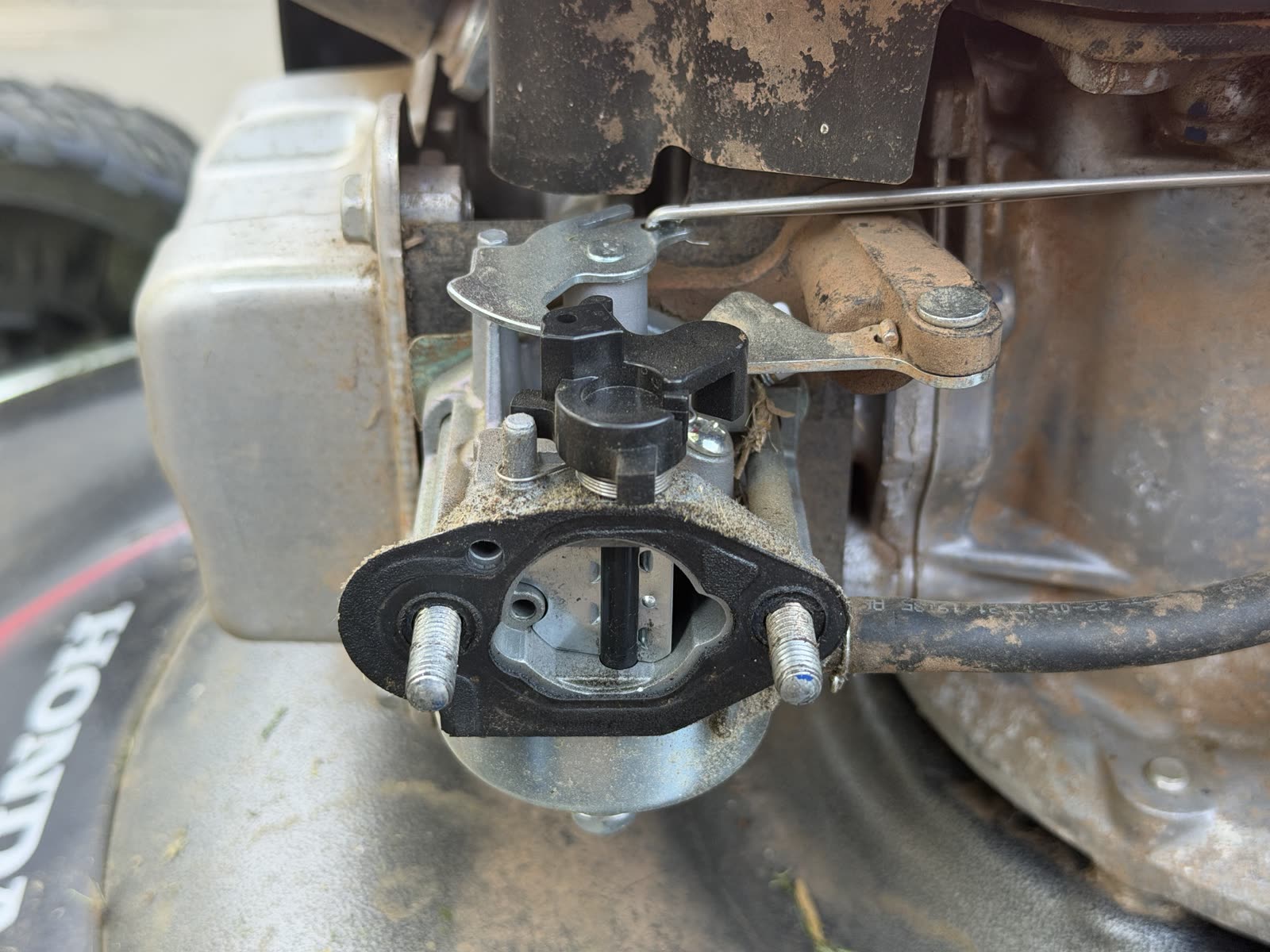
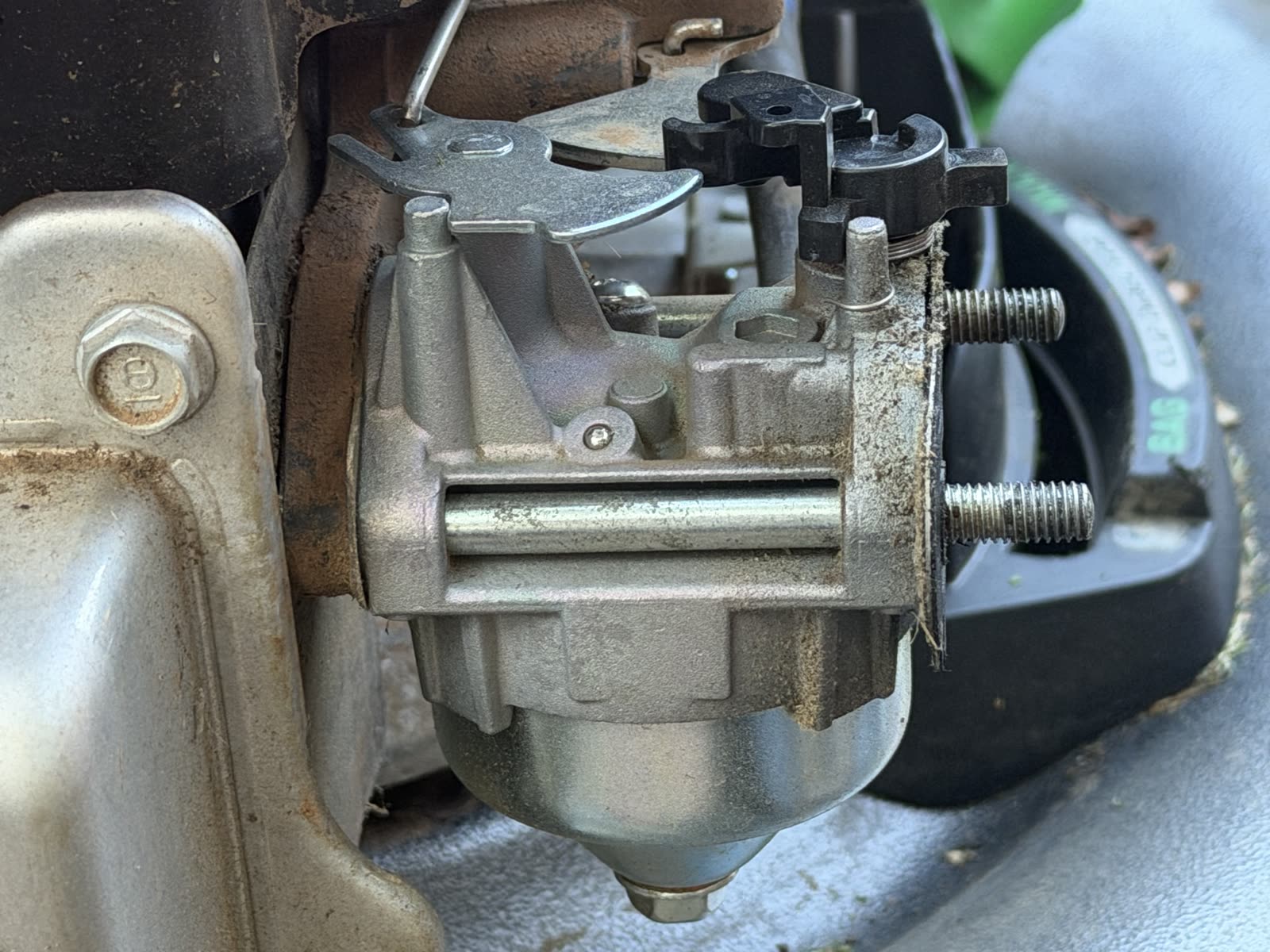
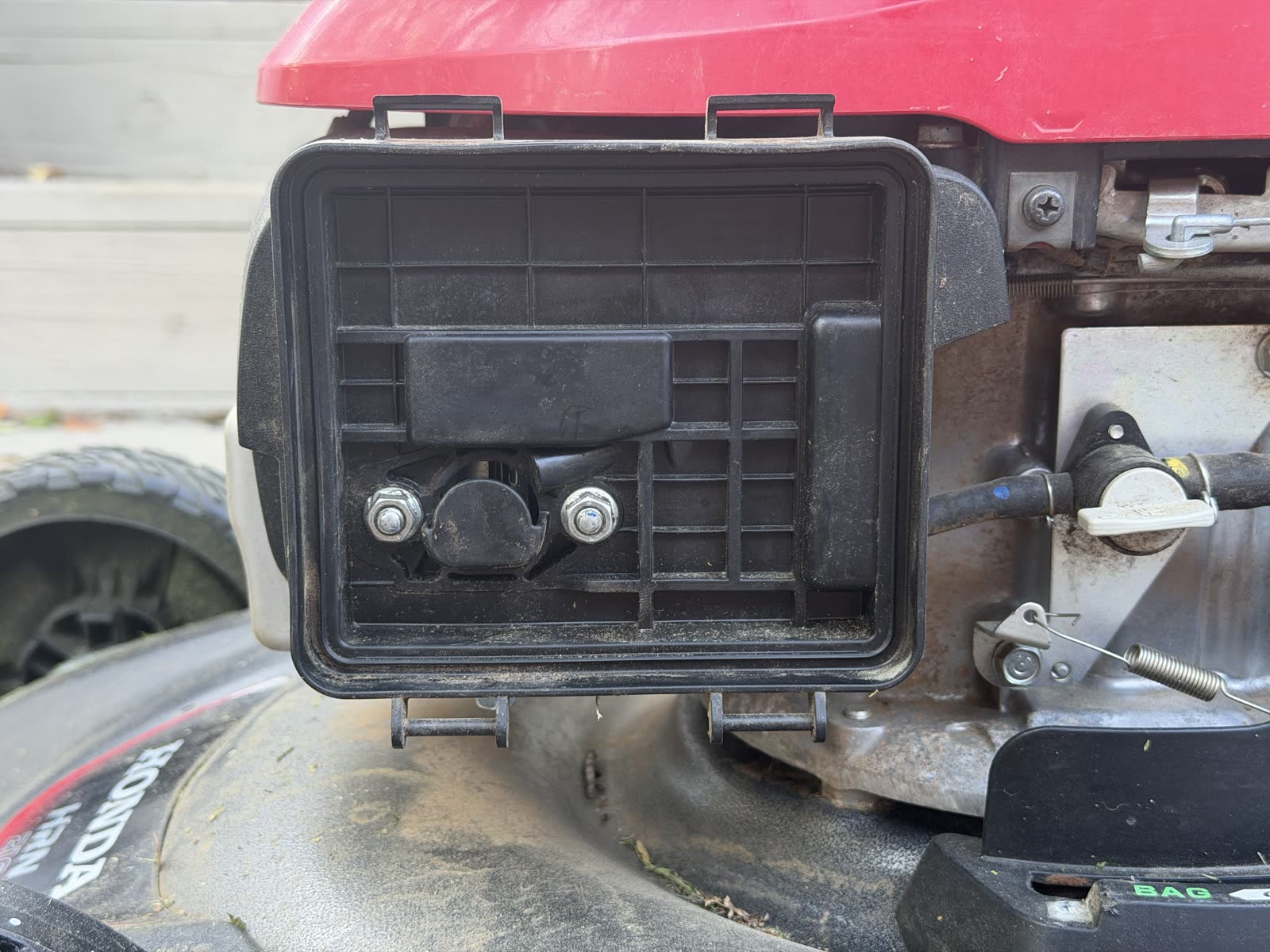
Mine started on the first pull.
Here’s the carb I used:

The 15-minute fix that worked for me. Order by the engine model/type/serial code stamped on the block, not just the family name.
Price as of Aug 7, 2026 · As an Amazon Associate I earn from qualifying purchases.
The five traps that make people say “I replaced the carb and it STILL surges”
This is the most valuable thing I found in the forums. Thread after thread starts with “new carb, same problem.” Almost every one resolves to one of these:
- Wrong carb for the exact engine. Multiple GCV-family carbs physically fit but have different jet sizes. Order by the engine model/type/serial code stamped on the block, not just the family name and not the mower’s deck model. (Mine is a good example: the HRN216 carries a GCV170, and plenty of listings blur the two families together.)
- Gasket errors. Old torn gaskets reused, gaskets omitted, doubled up, reversed, or with holes misaligned. Some Honda carb gaskets have vent holes that must line up. Block them and the carb can’t draw fuel even with a full bowl.
- The plastic insulator/spacer installed backwards. One DoItYourself thread chased a surge for weeks; the fix was flipping the heat-shield spacer that had been reinstalled backwards. The original carb was never the problem.
- Anti-surge spring in the wrong place. The governor’s anti-surge spring has one correct hole and one correct routing; it should not wrap around the linkage. Multiple holes exist; only one is right. This is why you photograph before disassembly.
- Dirty fuel tank feeding the new carb. Debris from stale fuel clogs the new pilot jet almost immediately. Clean the tank, outlet screen, and line before the new carb goes on.
One more note on cheap aftermarket carbs: plenty of owners report lean jetting on the no-name units, where the new carb surges unless choked. Mine has been flawless, but if yours isn’t, compare jets against the OEM carb, swap the OEM jets over, or buy the exact OEM part. Don’t drill jets — easy to ruin, hard to undo.
Air-leak test (verifies a gasket problem)
With the engine running, spray tiny amounts of carb cleaner around the carb-to-engine gasket joints. An RPM change means a leak.
Special cases from the community Owner-reported
Pressure washer (GCV160/GCV190) surges only when spraying. Two systems overlap here. If it surges with no load, it’s the engine; follow everything above. If it only surges under trigger/load, look at the pump: unloader valve, wrong nozzle size, restricted gun/wand, or insufficient water supply.
Honda EU2000i/EU2200i generator hunting in ECO mode. Same lean story, smaller passages. Clean the low-speed/pilot jet under the idle screw (count turns), the main jet, and the pilot air orifice. Generator carbs are extra-sensitive to stale fuel.
Surges only after it’s fully hot. If carb, gaskets, and fuel check out, move to: fuel cap vent, blocked cooling fins under the shroud, valve lash, and the ignition coil/armature gap.
Won’t start without starter fluid. If it fires on starter fluid, ignition is basically working; this is fuel delivery. Check bowl flow, the choke plate actually closing, and gasket vent-hole alignment. (This exact story played out on my own pressure washer.)
Prevent the next one: storage is where surging is born Official guidance
Honda’s own storage guidance is blunt:
- Storing more than 30 days: add fuel stabilizer (STA-BIL) to fresh gas and run the engine 10 minutes to circulate treated fuel through the carb.
- Storing more than 90 days: run the fuel system empty. Honda says not to leave gasoline in the system beyond 90 days of inactivity.
Nearly every surging thread I read traces back to a mower or generator that sat with untreated gas. One ounce of stabilizer is cheaper than any fix on this page.
Parts and tools mentioned
The 15-minute fix that worked for me.
Price as of Aug 7, 2026 · As an Amazon Associate I earn from qualifying purchases.

Required for any carb removal. Never reuse torn gaskets.
Price as of Aug 7, 2026 · As an Amazon Associate I earn from qualifying purchases.

For the cleaning path.
As an Amazon Associate I earn from qualifying purchases.

The only safe way to clear a pilot jet.
Price as of Aug 7, 2026 · As an Amazon Associate I earn from qualifying purchases.

Replace if dirty or fuel-soaked.
Price as of Aug 7, 2026 · As an Amazon Associate I earn from qualifying purchases.

The correct plug for GCV160/GCV190.
Price as of Aug 7, 2026 · As an Amazon Associate I earn from qualifying purchases.

Prevents the whole problem. One ounce beats every fix on this page.
Price as of Aug 7, 2026 · As an Amazon Associate I earn from qualifying purchases.
Basic tools: 10 mm wrench/socket, small flat screwdriver, Phillips screwdriver, needle-nose pliers, compressed air.
FAQ
Why does my Honda mower surge at idle but run fine when cutting? Under blade load the engine draws through the main circuit; at idle it relies on the pilot/idle circuit, which is the circuit most likely to be clogged. Clean the pilot jet.
Will a new carburetor definitely fix the surging? No. It fixes it if the original problem was inside the carb and the new one is the correct part installed with new, correctly oriented gaskets, the right spacer direction, correct spring placement, and a clean fuel tank. Most “new carb didn’t help” stories trace to one of those five traps.
Is it safe to keep mowing with a surging engine? It usually runs, but you’re running lean, which runs hotter, and you’re masking a problem that gets worse. The fix is cheap — do it.
Should I clean the carb or just replace it? Cleaning is cheaper and teaches you the carb; replacement is faster and more certain. At ~$25 for a GCV170 carb, I replaced first and kept the old one to clean later as a spare. If your carb is OEM and your engine code is unusual, cleaning the original may be the safer first move.
OEM or aftermarket carb? OEM is the safe answer, especially if your engine code matters (it does). My aftermarket unit has been perfect, but lean-jetted cheap carbs are a real, commonly reported issue. If an aftermarket carb surges out of the box, suspect the carb.
Sources
Honda official guidance: GCV/GSV storage and transportation · Honda carburetor check sheet (TE425, PDF) · Honda Lawn Parts carb servicing guide
Community threads consulted: Lawn Mower Forum (HRX217 surging; GCV160 starts only with gas in intake; GCV190 runs only on starter fluid), MyLawnMowerForum (GCV190 surge after carb replacement), LawnSite (GX340/GXV390 surging after carb cleaning/replacement), BobIsTheOilGuy (GCV190 surging; EU2000 carb cleaning), DoItYourself (GCV160 surging with new carb; GX160 surging at all RPMs), MyTractorForum, SnowblowerForum, and EU2000i owner discussions.
Fixed your surging Honda a different way? Tell me what worked. I’ll add it to the diary.